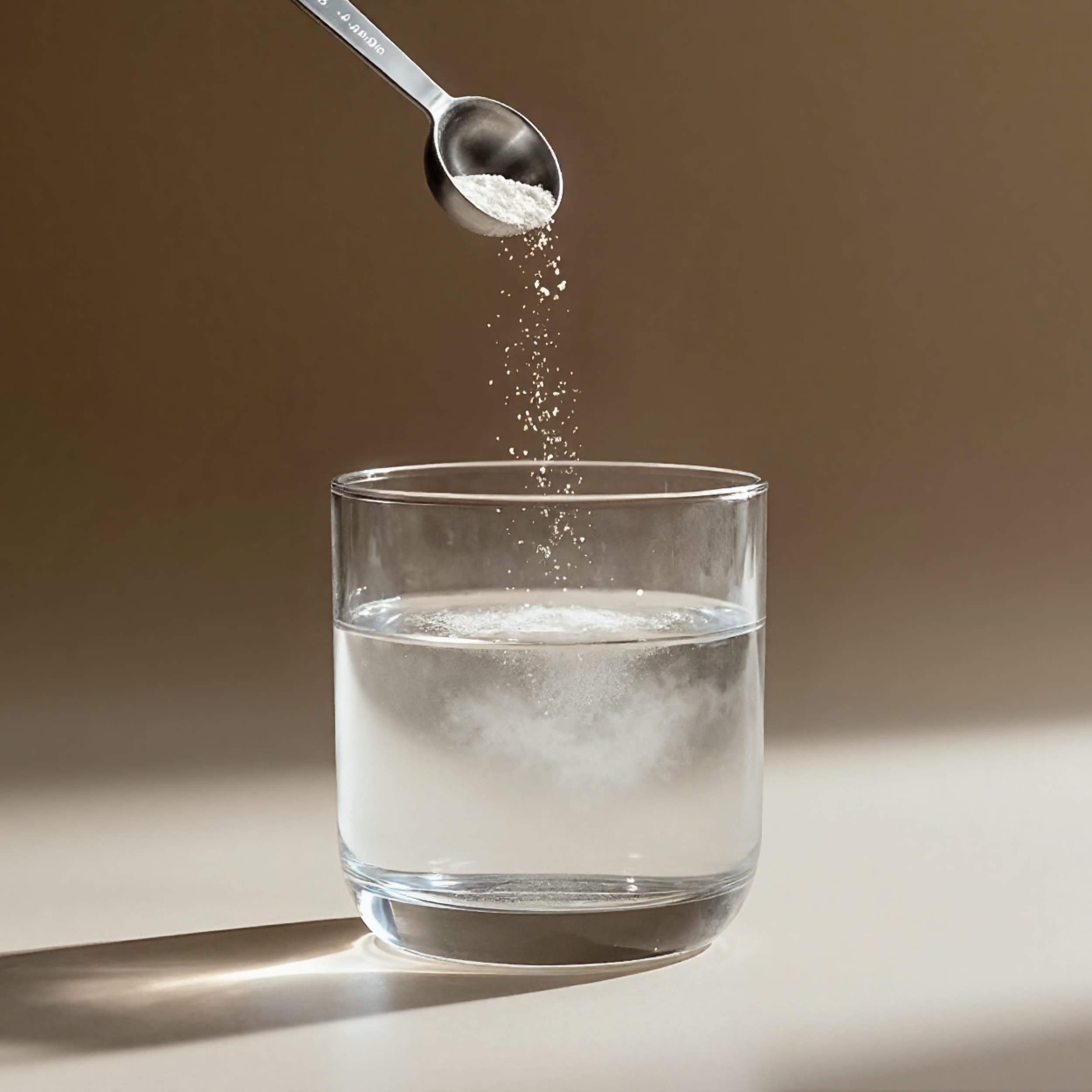
The science
For more than two decades, scientists have studied this compound for its potential benefits for increasing muscle mass and preventing muscle loss, among other things. More recent studies have investigated its usefulness in improving memory, and there’s even intriguing, though preliminary, research that creatine may play a role in supporting mental health in people with depression.
Creatine is a compound that your body makes from three amino acids and uses to provide energy for your muscles during exercise. Most people get creatine by eating red meat, seafood, and animal milk. The liver, pancreas, and kidneys also produce about 1 gram of creatine per day.
When it comes to creatine supplementation, creatine monohydrate is the most commonly used form and the type that has been most widely studied, with hundreds of clinical trials over the past 30 years. It is highly absorbed, and is the most effective, safest, and affordable form of creatine.
It is also endorsed by expert consensus including the International Society of Sports Nutrition and the American College of Sports Medicine, but Dr. David Dodick, professor emeritus at the Mayo Clinic and Chief Science and Medical Officer of the Atria Health Institute, still advises checking with your doctor before starting any new supplement. (Once you’ve done that, look for reputable brands with certifications from NSF Certified for Sport and USP Verified, both of which are third-party testers that ensure you’re taking what the label says you’re taking.)
The potential benefits
The broad research base and strong safety evidence behind creatine now makes it a useful supplement for many groups, including healthy adults, older adults, pre- and post-menopausal women, athletes, and more.
Creatine and lean muscle mass
A widely cited systematic review and meta-analysis published in the journal Nutrition in 2022 did a rigorous analysis of the evidence for creatine supplementation and increased muscle (also called lean body mass). Researchers analyzed 35 randomized trials that included a total of about 1,200 people to find clear—or at least clearer—answers about who it’s right for. Notably, they found:
- Creatine supplements did, indeed, meaningfully improve muscle mass, with the clearest benefit seen when it was combined with resistance training.
- When compared with people who did not exercise, those who did exercise saw an increase in muscle, especially among those who lifted weights.
- Taking creatine without exercising conferred no additional muscle mass.
- The increase was statistically significant in men but not in women, leading the authors to conclude that creatine appeared to work better for men than women.
- Age didn’t appear to affect results—both younger and older people benefited similarly when lifting weights
Creatine and women
Another study looked with more granularity at the connection between creatine and muscle mass in women across the lifespan. They found that pre-menopausal women can experience improvements in strength and exercise performance with creatine supplementation. For post-menopausal women, benefits for muscle size and function appear when using higher doses of 0.3 g/kg/day—about twice what’s typically recommended for men.
Beyond muscle, creatine appears to offer women additional benefits when combined with resistance training, including bone health. This suggests that while the muscle-building effects may be less dramatic for women than men, creatine still provides benefits for women's health at different stages of life.
Creatine and brain health
Another paper looked at the effects of creatine supplementation on memory performance and found no significant differences between men and women in the observed response. The benefits of creatine supplementation for memory were similar—and positive—regardless of sex.
The main factor influencing results was age, with older adults (66-76 years) showing significantly greater memory improvements than younger people (11-31 years), who showed little to no significant effects.
Why is this so? The brain uses a ton of energy—about 20% of the body’s energy reserves despite being just about 2% of body weight. Since we know creatine crosses the blood-brain barrier and increases brain energy stores, scientists suspect that the cells in the brain can use this additional energy in stressed states or when performing cognitively demanding tasks, such as memory recall.
Creatine and mental health
Creatine shows growing promise as an adjunctive treatment for depression. In one randomized trial of women with major depressive disorder, creatine added to escitalopram (an SSRI) produced faster and greater reduction in depression scores compared to placebo, with higher remission rates after two months of treatment. In another more recent pilot trial, creatine monohydrate in combination with cognitive behavioral therapy (CBT) also led to greater improvement in depressive symptoms compared to those receiving CBT with a placebo. Still, these findings should be considered preliminary until they are confirmed in larger trials.
Usage guidelines
While creatine is considered safe and has been endorsed by many sports and nutrition groups, Dr. David Dodick, professor emeritus at the Mayo Clinic and Chief Science and Medical Officer of the Atria Health Institute, still advises checking with your health care team before starting any new supplement.
Make sure you are taking creatine monohydrate, the most common and widely studied form. According to experts, the ideal dose for many healthy adults is 3-5 grams per day, whereas postmenopausal women could benefit from even more.
Who should be careful
- People with kidney disease or with risk factors for kidney disease should avoid high-dose creatine supplementation (more than 3-5 g/day).
- Dr. Dodick notes the weight of evidence over the past two decades indicates that long-term creatine supplementation at 3–5 g/day does not impair kidney function in healthy people. However.
- A note to share with your doctor: Creatine is metabolized to creatinine, a marker used in estimating kidney function on blood work. Since supplementation raises creatinine levels, this can create a false signal of kidney impairment in your labs. This means it’s important to let your doctor know about your supplement use, as clinicians must interpret this in context or use cystatin C or direct glomerular filtration rate (GFR) measurements for accuracy.
- There is limited safety research on the use of creatine supplements during pregnancy and breastfeeding, so it’s generally advised women avoid it during these times.
Product recommendations
Unlike prescription or over-the-counter medications, the U.S. Food and Drug Administration does not regulate supplements, so it’s also important to ensure the supplement you’re buying does not contain other ingredients you don’t expect and that it includes the same amount as described on the label. The best way to do this is to look for reputable brands with certifications from NSF Certified for Sport and USP Verified, both of which are third-party testers that ensure you’re taking what the label says you’re taking.
Creatine is one of the most well-studied supplements, with strong evidence for supporting muscle maintenance, strength, and high-intensity exercise performance. Research on cognitive and mood-related benefits is promising, but still evolving. As with any supplement, consider your individual health needs, consult with your doctor, and choose a high-quality product to maximize potential benefits and minimize risks.